Monday, May 18, 2015

Worst Triathlete Ever.

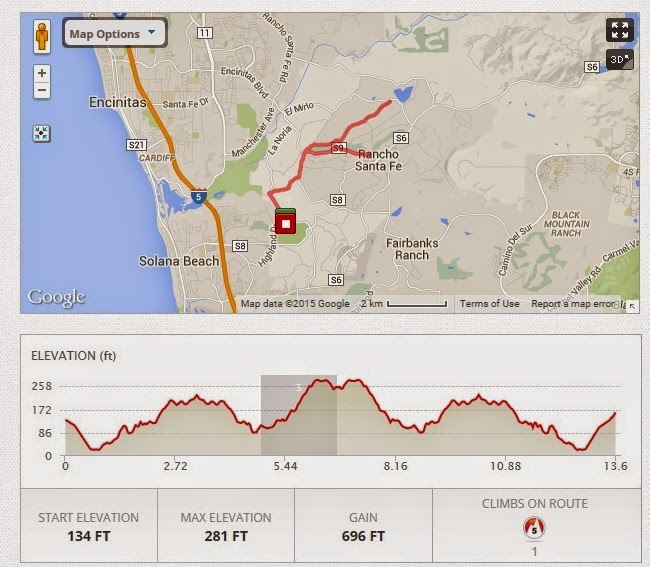
I'm going to start this post by saying that I suck as a triathlete.  But I'm ok with that...and I'm not talking about my times--I'm perfectly satisfied with how fast or how slow I've gone in past triathlons, depending on your point of view.  A number of years ago, I set a lifetime goal for myself of achieving a sub 13-hour Ironman, and a number of years after that, I achieved that goal.  That's probably the only concrete goal I ever had in this sport, and I achieved that goal.

So, the reason why I'm saying I suck as a triathlete is that I have just made the decision to stop, and that's something that triathletes rarely do.  I am still currently registered for Full Vineman at the end of July, and I'm pulling the plug on the whole thing.  So, I suck as a triathlete because I'm doing the one thing that the hoards and masses of triathletes who are out there would never imagine--I'm proclaiming that there is more to this sport than just the long-ass version of beating the crap out of yourself for an entire day because those distances were set as the "ultimate test of endurance."  I am....well, I'm done.

Last week, I had three injuries flare up on me--my plantar fasciitis was especially active, I tweaked my knee on my long run, and my back spasmed on me on Thursday--due, most likely, to the stress of 90 minutes of Thursday night traffic on the 405.  Running has evolved into an endurance event of pain tolerance--and I don't enjoy a single minute of it.

Brian hit the nail on the head when we were discussing this over the weekend--I started seeing all sorts of problems crop up when I made the decision to start training for an Ironman-distance event again...and it comes down to one thing--I'm trying to shove a square peg into a round hole.  As a swimmer, I was best at the sprint freestyles and the butterflies--all races that lasted less than 2 minutes (well, except the 200-meter fly...I wasn't that fast).  And as a triathlete, I've been down this path of doing races that last 5, 6, 12, and even 16 hours on a bad day.   Frankly, it's a friggin' miracle that I lasted through 3 Ironman triathlons, and an even bigger one that I did well on my third one.  This penchant toward speed is consistent across all three sports for me--My 5k times are faster than they should be relative to my 10k's and half-marathons--and I friggin' hate running full marathons.  While biking, I can generate all kinds of wattage for short bursts that would seem to indicate that I should be able to hold an effort for a 40k higher than I actually can.

So, I do not fit the mold.  I am no longer interested in trying to fit the mold. Trying to fit the mold causes me to do workouts that break me down to the point that I wind up with tight, weak muscles, and then I wind up injuring myself.  I'm done being on the gravy-train that longer is better, and that a "real triathlon" is a hundred and forty point six miles of unadulterated hell.

So, why is that triathletes all go in this direction of longer is better?  And more is better?  I saw a posting today that 100-milers are the new marathon--what the hell is up with that?  Marathons already break down your leg muscle beyond the point that is healthy for you--so please, people, just stop already.  Running 100 miles is not healthy. Period.

I'm Drew Giacobe, and I say Olympic Distance triathlons are awesome--but they're only awesome if I can back into swimming shape again.

Goodbye, obnoxiously long bike rides on the river path.  I am done with you.  And goodbye my dear love/hate relationship with the long run.  I'm moving on. 

Apparently, it is time to change the name of my blog.


Sunday, May 3, 2015

"The carousel never stops turning."

"The carousel never stops turning"--anyone who watches Grey's Anatomy will immediately know where this quote comes from, and what it means.  And everyone will also very likely have their own version of events that seem like life keeps going and never seems to stop throwing punches at you.

Right now, I'm dealing with a mortgage refinance, a solar panel installation, a demanding training schedule as a triathlete, my job as an aerospace engineer, and a check-up on my birth defect of a heart with a hole in it as a result of my annual physical. I've also just finished getting through an appeal of an application for life insurance that was originally denied because of a lack of documentation about that hole in my heart--assuming I am not randomly killed by a comet crashing into my house in the next 3 hours and I survive past midnight today, my husband should be fine to continue to live in our home in the event of my untimely demise.

I don't for a second think that the things that I'm dealing with are any different or larger in magnitude than what most of the world does.  I'm just insanely jealous of people who manage to keep these things in line better than I do.  "It's too bad you grew up--it's horrible being an adult."

Right now, I'm trying to cope with an incompatibility between my commute time, my time working, and my time training for triathlon.  To simplify the description, I was spending between 2 and 3 hours a day getting back and forth to work, and trying to get 2 workouts in most days really didn't mesh with that and my job.

I most recently tried to flip my work schedule to early in the morning and get my training in during the afternoons.  My days consisted of waking up at 4:30, and getting out the door by 5:15 to miss traffic in the morning, followed by working a straight day through without a lunch to 2pm so I could miss the evening rush hour (that goes from about 2:30pm to 7:30pm).  I would arrive home a brain dead zombie, and not really care about the patches of beard I had missed shaving that morning.  I grew irritated with my workouts.  Swimming is 7pm to 8pm, and I had problems winding down afterwards...often leaving me awake until 11:30...followed by a 4:30am wakeup.  I redefined "grumpy." And then I hurt my foot again during a training run.

Your body doesn't heal well or recover well from workouts when you're sleep deprived--and I don't sleep well to begin with, so when I recognize I'm not sleeping well--it's especially bad.  I fell apart on Wednesday and decided I needed to fix something, and I am incredibly fortunate that I'm being allowed to work part of my work week going forward at a facility that is closer to home.  My 1 hour to 1.5 hour commute each way will drop to 5 minutes on those days.  I am hopeful that this change will be the thing that brings my life back into the realm of reasonableness.

I spent some time chatting with my coach about the best way to make use of my new schedule, along with some concern about being 12 weeks out from Full Vineman and not feeling very well trained.   The awesomeness of having Joanna as a coach is that she is a never ending fountain of knowledge about how to deal with any amount of crap that might be going on in your life.  After talking with her and coming up with a game plan, I felt like I had the answer and everything would work out with the new plan.

So, I have this new concept for how to deal with weekly training, and I go to look at my work week and personal life issues for this week, and 3 out 5 days have things that aren't in line with what we talked about.....of course!  Tomorrow, I have a meeting in El Segundo, so commuting happens again--Tuesday, I get to have my heart imaged (yay.), and Friday, I've got to take Brian to the airport in the morning, obliterating when I was going to swim.  The effing carousel never effing stops turning.  And it kind of bothers me that for the screenshot that I took of my schedule, I could not fit the time I have scheduled from morning until night all on the screen at the same time.

It all works though--I've got to reorder stuff during my days, and it will probably take a week or two to get things to fall in line.  I'm just hoping I can look forward to riding the carousel now, rather than feeling like I have to get off of it and run screaming from the fair.


Saturday, March 28, 2015

Bayshore 70.4 Race Report

Between swim loops
I'm a little behind in writing up my race at Bayshore 70.4 this month--let's just say I've been busy...because I have been really busy, and I turned 41 this month, so I get a free pass.

Bayshore 70.4 is a local half-iron distance event put on by the Long Beach Tribe triathlon group, and I have to say, it immediately rockets to the top of my list of favorite half-irons to do. The name, all by itself, implies there is something different about this course, since they add a tenth of mile onto the swim from a standard half iron distance--and as a swimmer, my reaction is more like "Go ahead, add a tenth of a mile.  Actually add a mile to it--the swim is always too short in a triathlon!"

The race is billed as something between a training day and what's come to be known as the perfectly polished venues put on by the major powers in Ironman and half-Ironman distance racing these days.  While the beginnings of Ironman triathlon predate my existence in the sport (and almost predate my existence period), I imagine that the feel that I got from Bayshore 70.4 is a lot more in line with what the first Ironman event in Hawaii was like than what it has become now. The sport has evolved--it's elite level athletes racing and finishing the event in times that were unfathomable when the sport was first born--and it's awesome. It's just that it's different than what it began as.

T1--starting the bike
Bayshore 70.4 was first put together "by Erin, Mike and Barry in 2011 as a workout to launch their successful IMAZ training" (taken directly from their website).  I did something similar in 2008 when I was training for my first IM Arizona in April of that year, because races leading up to April are scarce, and I needed a half iron to work through training.  This event has a double loop swim at Bayshore in Long Beach, an out and back bike ride (fairly flat) predominantly on the San Gabriel River Trail, and a run along the beach in Long Beach.

Make no mistake--if you come into this event expecting a closed course--athletes dominate the area--complete safety while racing--type of experience, you will be horribly dissatisfied. But if you're after what I was--something more like a day to challenge yourself, to test your capabilities in a long triathlon, and something that is just more relaxed...it's an awesome place to be.

The differences begin right from the point where you sign up.  I was enamored with the statement that they would have timing chips this year.  Packet pickup the day before was about picking up your packet...instead of wading through a tent-city of merchandisers strategically placed to make you look at everything on your way to picking up your packet.  I chatted with some people in line (the line was only about 5 people deep, so there wasn't much time)--someone was there doing their first half iron.  And there was somebody who was having drama that there were not course maps available...but from what I could tell, those maps were going to be available later, and he just happened to show up right at the beginning of packet pickup.  Since I train on the San Gabriel all the time, all I needed to know was how far up the turn around was, and that was easily answered--frankly, I didn't really even need to know that at this point...but it's nice to visualize where you're going to turn around.

Leading into this event, I was having problems with my back--one of the reasons to do this early season event was to shake out issues that I would need to correct before racing Full Vineman this summer.  My back is my primary focus from here on out.  In any case, I talked with Joanna the day before, and wasn't sure if I'd even be able to get up and go to Bayshore at all the next day.  It was entirely possible I would wake up with the sharp stabbing pain I've had in the past, and not be able to swim, let alone bike or run.  I spent the remainder of the day doing what I could to loosen up my lower back--some time in the hot tub--some stretching, but not overstretching.  Stay relaxed, stay hydrated, drink some V8 and hope for the best. Joanna and I talked at length about the various outcomes that may happen, and I'd take the day one step at a time.  Each leg of the race would have it's own set of circumstances.   I was going to work the swim only as much as I could and not adversely affect my core muscles for the bike.  The bike would be about riding intelligently--taking it easy to begin with and seeing what kind of pace I could settle into, while focusing on a negative split effort if my body allowed it in the back half.  And the run would be about doing what I could and surviving to the finish line.  In any other race, I might not have even started, but since this is right in my backyard, and I knew how to bail out of the course and get home all the way through it, it made sense to take it as it came and treat it as a training day.
Perhaps the best finish line picture of me, ever.

I slept like a rock the night before this race, which is really, really unusual for me.  Too relaxed?  Maybe.  Whatever--I welcomed it.  I think I was the last person to get into transition, or maybe the second to last...because--hey, the race starts 2 miles from my house.  Why rush?  It turned out I hadn't planned on where to park, and wound up standing in line because the beach pay-stations are ridiculously slow to use.  I wound up leaning my bike against a wall in the transition area because the racks were at capacity, and thought to myself that a WTC race official in any other race would have yelled and screamed at me until I made a whole bunch of people screw up their transition areas to squeeze me into their rack--or they would have said something once, and then quietly disqualified me. But Bayshore 70.4 is about just rolling with the punches--there's a space there?  Well, use it!

I got done and was ready for the swim about 10 minutes ahead of time.  Brian came with me to help me into my wetsuit--because my wetsuit is ridiculous, and requires a series of coordinated movements and someone to aid me to get the back zipper closed (the thing I hate most about this wetsuit is the upside-down zipper).  The swim was relaxed--it required two loops with a short run out and back into the water in between, and a couple of spots you had to swim over a rope on each loop because it was half in and half out of the sectioned off safe swim zone at Bayshore.  My hand got tangled in the ropes that were holding together the turn around buoy when I passed it on the second loop.  As I stopped for a few seconds to take my hand out of the ropes--I thought "Somebody really went to war with this thing..."  I swam into the large swim area demarcating rope shortly thereafter and felt my back tinge--that may have been it for me for the day, but it turned out that it didn't bother me for the rest of the swim or going into the bike.

I came out of the water and in transition heard somebody tell someone behind me they were 5th...so I assume I was 4th out of the water, but don't really know for sure.  I got through T1, and took off on the bike.  The first couple of miles of the bike (and the last couple) are on streets, and you have to deal with a handful of traffic lights.  On the way out, it's really no big deal, because they are all either straight-throughs or right turns.  On the way back, you could get nailed by a lot of traffic and some long waits for a left turn signal, and you just have to accept that (and remember--it's a long training day).  The ride went better than I could have possible imagined--I stuck with the plan.  I sat up a lot.  I got out of my seat when it was completely unnecessary.  My focus was on keeping my back loose.  I negative split my race and averaged 199 watts for the whole thing (8 watts higher than my previous best at this distance)--wattage was in the lower 190s going out, and above 200 coming back.  At the halfway point, I stopped for a short bit and the guys at the turnaround refilled my bottles for me--they were prepared to do a much more rapid swapout, but I just told them that it was a long training day for me and didn't need to rush.  One of them said something like "But you're dominating!" and then they offered me a beer, which I actually considered for a brief second--but decided I should get on my way.  The ride back was uneventful--you have to yell "On your left" a lot on this course because it is well used by local cyclists and people just out for a fun ride, but it's fine as long as you have a set of lungs on you.  I got insanely lucky with the left hand turns on the streets leading into T2, and wound up splitting just under 2:45 for the ride.
Bike Power--the few dips are where you have to slow down, or you will crash

In T2, somebody told me that I was in 13th place, and I thought to myself "Well, I'm about to be in 80th" but with my out-loud voice I thanked them.  The run wound up being a 3 loop run along the beach that was changed the morning of the race.  I can only imagine how difficult the city was being with the people who put on this event, if it culminated in a literal last minute change.  Kudos to Tribe for handling it so well.  The run was one of the best marked and best organized and supported runs I've done for a triathlon.  My back, however, had a different opinion of the run--it would turn out that it decided it was not ever going to loosen up on me for the entire half marathon.  I struggled through the first 2 loops of the run, and then completely fell apart on the third. My friend Steve had planned on meeting me during the run to get his Saturday run in, and wound up joining me just as I was falling apart--it was good to have somebody who was capable of chatting (one sided chatting for the most part) to help keep me going.  And that's what's great about this course--some races would have strictly forbade this...booted him off the course and disqualified me, but it didn't matter here.  It was an open course and the moral support was amazing.  I split a time of 2:19 on the run...way off of what I should be capable of, but probably the best that I could imagine given my back issues.

I finished the day in 34th place (out of 100), in a time of 5:39, which was my 2nd fastest half iron to date.

I have to say--this event is amazing.  It hearkens back to something more pure about the sport than a quest for merchandise with a logo on it.  It's about challenging your body, and having fun doing it. Sign up for Bayshore 70.4 if you can (it fills up every year), and set yourself up for a day of having a good time swimming, biking, and running.  I think seasoned triathletes and newbies alike can find something different to enjoy and challenge themselves with, that you just don't get at other events.


Saturday, March 21, 2015

Happy 41st Migraine birthday...

Everything hurts.  I woke up this morning to the alarm I set last night to get going on my brick workout, and I know that it isn't going to happen today.  My movements happen in slow coordination as I try to figure out my next steps to move out of this attack, and I'm not sure what to do.

At 2:30am, I was woken by an intense pain in my head, on the left side, behind and to the left of my eye, with some diffusion across the rest of my skull.  I managed to make it downstairs, ate something and took some Aleve.  It took until 3:30 to fall back asleep...the pain of this migraine was intense enough that I couldn't sleep until it dulled.

So this morning, I am in post-apocalyptic damage control mode.  I know that maintaining a normal caffeine schedule is crucial to exiting this mess, and forcing myself to have a normal breakfast is key as well.  I do not want to eat.  I do not want to move, in fact.  I can feel the effects of the migraine lingering--blood vessels in my temples are still swollen with the after-effects of the increased blood flow that accompanies this headache.  My back and my feet hurt as if to say "Don't forget us--we cause you problems too!"  All of the muscles I have problems with maintaining flexibility get ramped up to contract just a little more.

There's a fluid imbalance that often goes with migraine, which makes my light-headedness and general ill-feeling from yesterday make sense.  I did not, however, predict that this would wind up peeking with the headache that woke me up last night.  I am also not sure why I'm having a cyclic period of these migraines now--though it is not out of the general trend that I have had in the past.  I'll go 2 or 3 months with these happening frequently, and then not experience one for several years.  This round started sometime in January, I think, so I am hopeful that it is coming to an end.

For triathlon, I've been through the bargaining stages for today's workouts--"I'll get a shorter brick in"...turns into..."I'll do my brick tomorrow, and go for an easy swim today."  I don't know where I'll land, except that I know that on my 41st birthday, my first task is to make an omelette and force myself to eat it, because a full breakfast is key to climbing out of this disaster.

Monday, February 16, 2015

Tour de Palm Springs

I'm getting some down time in this weekend...and what else to do, other than ride a bike for a hundred miles while you're on vacation?

I road the century at the Tour de Palm Springs, and it was a great time.  The weather has been unseasonably hot, with highs reaching into the upper 80s--I know a lot of the United States is covered in blizzard conditions and entrenched in snow, so I feel very lucky to have this kind of weather for a long weekend getaway.

Elevation profile for Century Ride
The Palm Springs century has a great first half of the course.  The first 13 miles are a climb of about a thousand feet, which is just gradual enough at times that you don't really realize you're climbing that whole time.  There are definitely steeper and less steep sections for variety, but anything that seems flat is actually still a gradual uphill during that time.  It took me an hour and ten minutes to reach the top.  Following that, there's a screaming descent for about ten miles, and then some rolling hills before you reach another descent to the 51 mile mark.  That portion of the course is beautiful and scenic--taking you through windmill farms, and uninhabited back country on the North side of the freeway from the desert cities.

Century Route (101.5 miles)
The back half of the course leaves something to be desired.  It routes through neighborhoods of the cities of Indio, Palm Desert, Cathedral City, and eventually back into Palm Springs.  While there are times that it goes through some more scenic venues (like Palm Tree farms), there's a lot of traffic lights to deal with, and it's an open course, so a lot of traffic to deal with as well.  The combination resulted in a lot of time waiting at stop lights.  It also dealt me the hand of getting pummeled by this one peloton of riders taking off at every traffic light for about 20 miles, only to catch them and pass them before arriving at the next light.  This is the curse of the constant wattage mentality of the triathlete banging up against the surge-and-cruise mentality of the pack cyclist.

In order to fall in line with a pack, you'd generally have to hammer in 300-400 watts to accelerate with them from a stop, and then draft off the back of them, and drop down to something small, like 120 watts.  While that kind of riding has its place, it's not the way that training goes down for someone working on their ability to sustain an effort for an Ironman or Half Ironman distance race. Since drafting is not legal in the sport of triathlon (aside from the format reserved for the elite few that race at the ITU level), your ability to race well depends on your ability to average higher wattage over the course of many hours, and generally speaking, each of those bursts of power takes away from that capability for a given ride or race.  It also makes it much harder to have a good run if you've spent your time hammering in massive spikes in power over the course of 56 or 112 miles.

Blue skies for a relaxing day at the hotel pool
I'm extraordinarily happy with the way this ride went--after my surprise half marathon PR last weekend, I spent several days extraordinarily sore, and my knee was irritated and tight.  My running this past week suffered--an easy 3 mile run one day, 4 miles another day, and I still had knee pain going on.  I biked easy until Thursday, when I was able to put some decent intervals on the bike.  Approaching this century ride, I asked my coach if she thought I was in a position to make it through this ride, and I had already figured an escape route if I started having issues early on in the ride.  We decided to let it be my call on the morning of the ride.  At about mile 30 of the century, there's a merge back into the 55 mile course that would create about a 68 mile ride instead of the 101.5 miles for the full century.  I got to that point and felt good.  There's also a way to cut about 20 miles off the course later on, and I got to that point and felt that was unnecessary.

I completed the century ride in about 6 hours and 40 minutes (stopping time included).  My actually moving time was 5 hours and 50 minutes.  (Lot of stop lights and a couple of SAG stops to refuel and re-sunscreen).  More importantly, my normalized power was 2 watts higher than my best ironman bike split--156 watts, so it was a complete shock to me!  Even without the difficulty recovering from my run last week, I wasn't sure how well trained I was for a long duration bike ride, since my off season rides have been in the range of about 3 hours up to this point.  It all worked out really well!

And now I'm off to enjoy my last morning of lounging by the pool before heading back to the real world.

Monday, February 9, 2015

Nana korobi ya oki / San Dieguito Race Report

So you've all seen my Facebook page in the last couple of months and know that I got a tattoo, and probably know what it means...but I haven't really written about it yet.

IMAZ, 2008.  I look like I'm going to puke.
About 15 years ago, I decided I wanted to do an Ironman triathlon, and I set about doing what I thought I needed to do in order to get there.  Like the fool that I was, I thought the hardest part would be the run, because I was a swimmer--and what could possibly be hard about riding a bike? Years of grueling workouts would eventually teach me exactly what could be hard about the bike.

I started with training for my first marathon--it would be the LA marathon of the year 2000.  And then I quit my job, and moved to Austin, TX, and decided I would run the Austin marathon that same year instead.  And that's when I injured my foot, in what I would be told by a doctor was this weird thing called "Plantar Fasciitis."  To fast forward through the whole mess, I gave running and triathlon a go for a while, and successfully ran some half marathons, did a couple of olympic distance triathlons, and some sprints, but I never conquered my problems with my foot pain.  I eventually stopped doing them completely, and just focused on swimming...and even that fell to the wayside at times.   It turned out that I was in this really awful relationship (thankfully, gay marriage was not legal at the time), and I lost myself...I lost myself a lot. 

But I eventually found my way back--and had a lot of help along the way.  Elaine Ryan may not know the impact that Brian watching her finish the Long Beach marathon had on me that year--he came home that day, and talked about how he wanted to run a marathon, and I decided I was going to call his bluff.  I laid out the training plan based on the same calendar I'd used leading up to LA/Austin of 2000, and it turned out that we needed to start in a week and a half.  And Brian was like "Yeah--let's do that!"  And I was thinking "I'll go along with this, and he'll give up...and we'll get to eat a lot of pizza along the way."

First sitting for tattoo
It turned out I actually made it to the start line of that marathon, and finished it.  I walked a lot in the last 10 miles, and Brian beat me by something like an hour--I could go look at the exact times, because we framed our finisher's certificates as our first marathon.  I would go on to complete Half Vineman, Ironman Arizona in April of '08 (the last year they had it in April)--it was hell on Earth. I would eventually complete 3 Ironmans, numerous half irons, and who knows how many runs, bike rides, and shorter distance triathlons along the way.

I would also go on to fight injury--and with the help of my coach, I would learn how to deal with it correctly. Being an endurance athlete means figuring out how to deal with your deficiencies, and if you don't figure out how to deal with them, they become injuries, if they weren't already injuries to begin with. Over the past 2 years, I've dealt with a significant recurrence of my plantar fasciitis and also some excruciating lower back pain that I refuse to go get imaged to "see if there's a disc problem."  I watched Brian have his spine fused and decided that my pain was not significant enough to consider that as an option, even if I have a mechanical defect of my spine.  I'm not in denial--my chiropractor thinks it probably isn't a disc issue, but may be an irritation of the facet joint, and thinks that my dominant problem is all about muscular tension, imbalance, and weakness.

Finished tattoo
The last 6 months have been about approaching these issues from a different place--I'm getting massages every other week, seeing a chiropractor once a month, and doing strength exercises to build up the core weaknesses that I have.  And I have been running more consistently and faster than I ever have before.

Earlier last year, Joanna asked all of her athletes to come up with a mantra--whether we kept it to ourselves or not--something that you could draw motivation from.  I defaulted back to something I used to say to myself as a swimmer, which was Muhammed Ali's "Float like a butterfly, sting like a bee."  I didn't realize it at the time, but my mantra is actually what I had tattooed onto my torso during the off-season this year.  The Japansese proverb "Nana korobi ya oki" means "Fall down seven times, stand up eight," or to put it simply, to never give up. 

But it's more than that--it's about figuring out what not giving up actually means--it is not a blind step forward every time you get knocked off of your original heading.  It's about finding your path in life in the face of all of the obstacles that are thrown at you. And special thanks to Robbi Miller, for telling me how to pronounce the phrase--I feel like I probably should have figured that out before I had it permanently inked on me!

Yesterday, I ran the San Dieguito half marathon, and I would have been happy with my result even if I had to walk the last few miles into the finish--it was the first half marathon I've run in over three years due to injury.  I would have been ecstatic to be able to run the whole thing, and when I came to understand just how hard the course was (at about mile 3, in the middle of the race), I realized that doing anything close to my old PR on this course would be an outstanding success.  My old PR was
Hill profile for San Dieguito 1/2 marathon
1:53:50, which was done on the Long Beach Half Marathon course...one of the defining courses for the word "flat," with a bridge or two.  Yesterday, I ran 1:50:37 on what "is arguably one of the hardest half marathons around," to steal the description from Joanna. If Joanna says it's a hard course...it's a really damn hard course!

I think the more important thing is that I'm really enjoying what I'm doing again, and that's what really matters. So get out there--seize the day--get knocked down, and find your way to get up again!


Sunday, February 1, 2015

Don't be a statistic!

Yesterday, I was perusing articles online, and one grabbed my attention--the subject was that athletes are not immune to hypertension. Without repeating all of the details, the net conclusion was that studies on athletes involving the risk of high blood pressure have been poorly done, and not well documented, but that statistically, it appears that athletes have the possibility of developing unhealthy blood pressure independent of their activity level.  The conclusion makes sense--if you work out all the time, it does not give you carte blanche to eat nothing but fried food and desserts while smoking and drinking a fifth of vodka every day.

What concerned me was some of the comments to this article--and one in particular from a guy who was obviously a medical doctor of some sort.  He stressed that his recommendation was for everyone to take in no more than 2300 mg of sodium per day.

About a decade ago, I was diagnosed with a heart condition, called a patent foramen ovale with atrial septal aneurysm (PFO w/ASA), and was simultaneously misdiagnosed with hypertension. The PFO w/ASA is a topic for another post--but right now, I think it's important to point out the missteps that the medical community made in relation to my misdiagnosis.

First and foremost, blood pressure readings were taken on me that indicated that I had borderline high blood pressure, measuring anywhere from 130/85 to 150/95.  These numbers, standing without context, are enough for pretty much anyone to suspect that there is a problem. But context is something that appears to have lost traction in today's slam-bam-thank-you-mam 5 minute visit with a medical professional.  I was placed on blood pressure medication, and my numbers came down...way down.  Frankly, I think that I could barely move.  I lost the ability to exercise effectively--running become next to impossible, and I wound up having to move down a couple of lanes at masters swimming.  It was my own conclusion that a drug that prevented me from working on things to improve cardiovascular fitness was probably not the right answer, and I stopped taking the blood pressure medication. I did, however, heed the advice of the doctors to watch out for "excessive sodium intake" and began watching my diet for these things while training for and (barely) completing my first marathon.

In the years that would follow, I would successfully complete two ironman triathlons, along with a number of other things, take off a minor amount of weight, and have wildly fluctuating blood pressure readings.  All the while, I would watch for dietary consumption of sodium, but know that to complete an ironman triathlon, supplementing electrolyte intake was important.  People collapse on the course due to sodium depletion routinely--so routinely that seeing someone hooked up to an IV in a medical tent is an expected part of the race.

I developed wicked headaches after most of my long distance training sessions.  Common knowledge was that I must have been dehydrated, and I would talk to people (other athletes, my GP, one of the several cardiologists I saw, and a nephrologist) about this, and explain that my urine was clear, and a universally puzzled look would come across their faces and the conversation would end. It was not until I started working with my current triathlon coach (Joanna Zeiger) that we got to the bottom of this.

I raced a half marathon one day, and did not do as well as I would have liked. My muscles seized on the finish line and I couldn't move for a period of several minutes. This passed--and I went home and somewhere during this process texted Joanna my result, the fact of my headache, and that I seized up on the finish line, and that I was in no condition to talk to her.  She was persistent (not out of the norm for Joanna), and eventually got through to me that she thought that I was low in sodium.  She had no idea at the time what I had been through regarding the whole mess with my heart condition and the recommendations from doctors to limit my sodium intake. In desperation, I conceded to try consuming what would wind up being three cans of V-8, with a little water to wash it down (that's right--36 ounces of the stuff, containing nearly 3 grams of sodium). The effect was rapid--over the course of a couple of hours my headache would disappear, my mood would improve, and I would feel like the adverse affects of the half marathon never occurred in the first place. In the past, once a post workout headache would occur, it would stick with me for the rest of the day, and only relent with the passage of time, generally until the next day.  So, this change was dramatic.

The fact of the matter is that physicians are trained to act based on statistics--the vast majority of patients that they see with a high blood pressure reading are sedentary and they do not exercise at all, let alone to the point that triathletes do.  The recommendation of no more than 2300 mg of sodium per day holds true for a very large percentage of the population, so they're going to be right probably 99% of the time.  The problem is that endurance athletes are the statistical anomaly in their day to day operations.

  • Endurance athletes sweat (a lot).  It's not uncommon for me to lose, and subsequently replace, 5 pounds of water weight a day while training.  Each pound of sweat lost contains, on average 1.5 grams of sodium.  Simple math reveals that 7.5 grams of sodium lost is much more than the 2.3 grams of dietary sodium recommended as a maximum.
  • Athletes tend to have more muscular arms.  It turns out that most nurses, and some doctors, are unaware how much the wrong size blood pressure cuff can affect a blood pressure reading.  Switching to the "fat-people cuff" revealed that my blood pressure is within the norm for the population.  Too small of a cuff crushes the blood vessels in the arm, creating a situation where an accurate reading is impossible.
  • Athletes tend to get workouts in all the time...and those workouts can cause increases in blood pressure that last for hours, often spiking that blood pressure reading during your office visit.
  • Some doctors have a problem with a god complex.  One cardiologist I saw would not even let me finish a question about how much I sweat and how to deal with that while limiting sodium intake.  In retrospect, it would have been best if I had never gone back to see this guy again.
  • Low blood sodium is much more dangerous than high blood sodium is, with risks including hyponatremia, brain swelling, loss of muscle coordination, and potentially the risk of fatal fluid buildup in the pericardium.  It is possible that the heart palpitations I have experienced in the past are the result of insufficient sodium in my bloodstream.
  • A lot of pills sold as electrolyte supplements do not contain enough sodium to be effective.  Before my collapse at that half marathon, I was using Endurolytes (80 mg of sodium per pill) and not taking enough of them.  Since then, I have switched to SaltStick (215 mg of sodium per pill) and now take 4 per hour while running (or more if very hot).
The simple fact of the matter is that today's medical industry does not adequately address the needs of the athlete, and it does so for very good reason.  The endurance athlete is the 1% of the clients that they see, and they're going to be right much more often by ignoring them.  I have to remind my doctor during my annual physical to use the large blood pressure cuff, that I worked out a couple of hours beforehand, and that in the past week I've sweat out approximately 15 liters of fluid. Nobody is going to fix this problem with modern medicine, but with the right knowledge at your disposal, you can probably avoid becoming a victim of it.